If you are looking at a La Habra property and wondering, "Could this lot support an ADU?" you are asking the right question early. ADU potential can change a property’s long-term value, flexibility, and rental use, but the answer usually comes down to site layout, utility access, and local rules rather than lot size alone. This guide will help you evaluate what matters most in La Habra so you can screen opportunities with more confidence. Let’s dive in.
Why ADU potential matters in La Habra
An accessory dwelling unit can create more flexibility for how you use a property. In many cases, buyers consider ADUs for multigenerational living, long-term rental income, guest space, or a private work-from-home setup.
In La Habra, ADU feasibility is often more about the shape and layout of the lot than the total square footage of the parcel. According to the California Department of Housing and Community Development ADU Handbook, state law limits how local rules can use minimum lot size to block qualifying ADUs.
Start with La Habra ADU basics
La Habra allows ADUs on lots with an existing or proposed single-family or multi-family dwelling, including duplexes, according to the city’s Accessory Dwelling Units page. JADUs are more limited and are only allowed within single-family dwellings.
A single-family lot may have one ADU and one JADU. On multi-family lots, attached ADUs are limited to existing non-living areas, and detached ADUs may also be allowed subject to the city’s standards.
It also helps to know the difference between an ADU and a JADU before you evaluate a property.
ADU vs. JADU
A standard ADU can be within the home, attached to it, detached from it, or created through a conversion of an accessory structure. A JADU is smaller and more restricted.
Under La Habra’s rules, JADUs are capped at 500 square feet, require a separate entrance, and are subject to deed-restriction rules, as outlined in Ordinance CC2025-05. If you need more flexibility or rental utility, a standard ADU is often the better fit.
Lot size is not the main filter
Many buyers assume ADU potential starts with a large lot. In reality, California law is structured so that a qualifying ADU opportunity often depends more on where the unit can fit on the site and how it connects to existing improvements.
The updated HCD ADU guidance explains that minimum lot size, open space, lot coverage, and floor area ratio standards cannot be applied in a way that blocks certain ADUs allowed under state law. That means your first screening step should be a site-design review, not a simple lot-size test.
Best lot features for ADU potential
In La Habra, some physical traits tend to make a property much easier to work with. If you are comparing multiple homes, these are often the features worth prioritizing.
Usable backyard depth
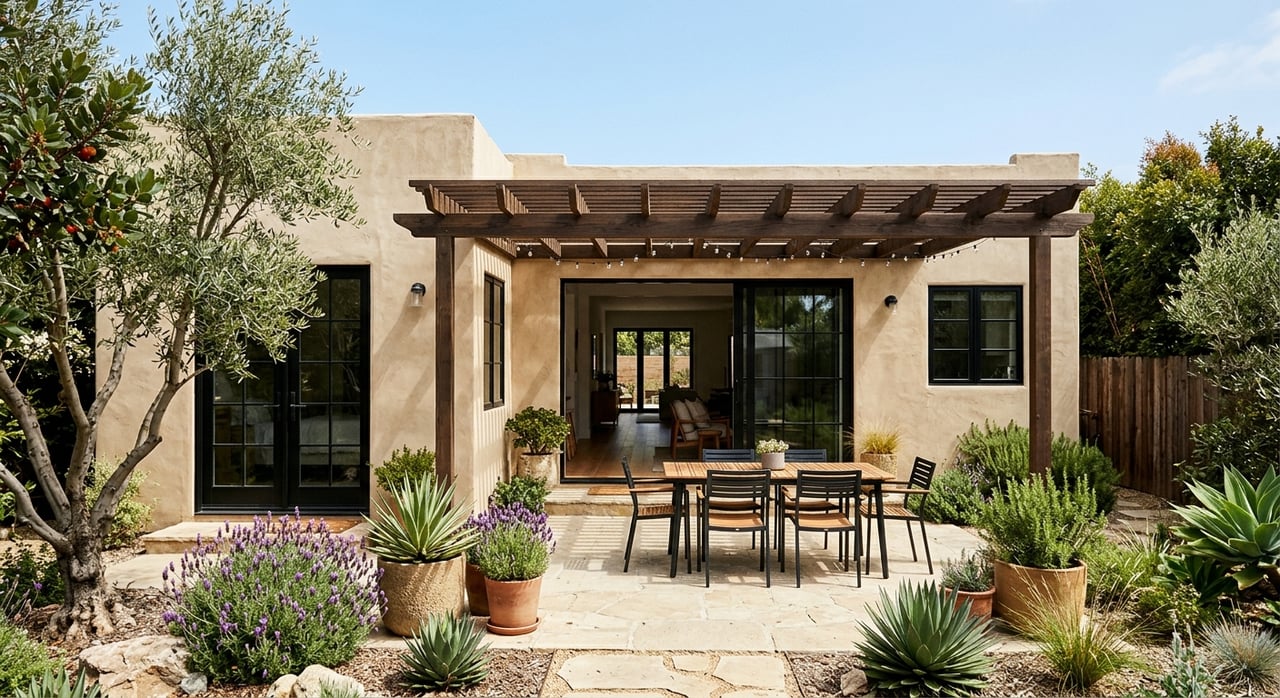
A deeper backyard can make it easier to place a detached ADU while still respecting setback and separation standards. This is especially helpful on single-family lots where you want to preserve access and practical outdoor circulation.
La Habra generally requires four-foot side and rear setbacks for new attached or detached ADUs, and detached units must usually be at least 10 feet from other buildings on the lot under Ordinance CC2025-05. In plain terms, a lot with extra rear-yard depth often gives you more design options.
A workable side yard
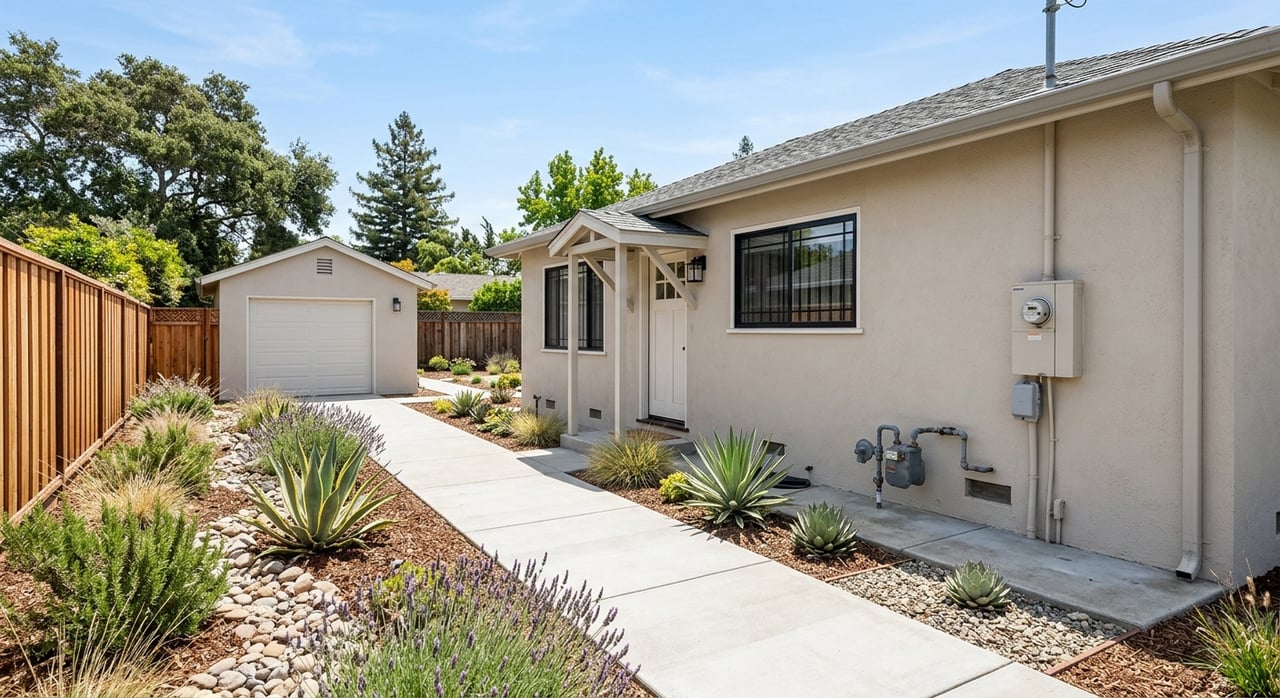
Even when the backyard is not huge, a decent side yard can make access and placement easier. This matters for detached ADUs, circulation around the house, and practical construction staging.
Tight side-yard conditions do not always kill an ADU plan, but they can narrow your options fast. That is why a visual site check is so important before you assume a project will pencil out.
An existing garage or accessory structure
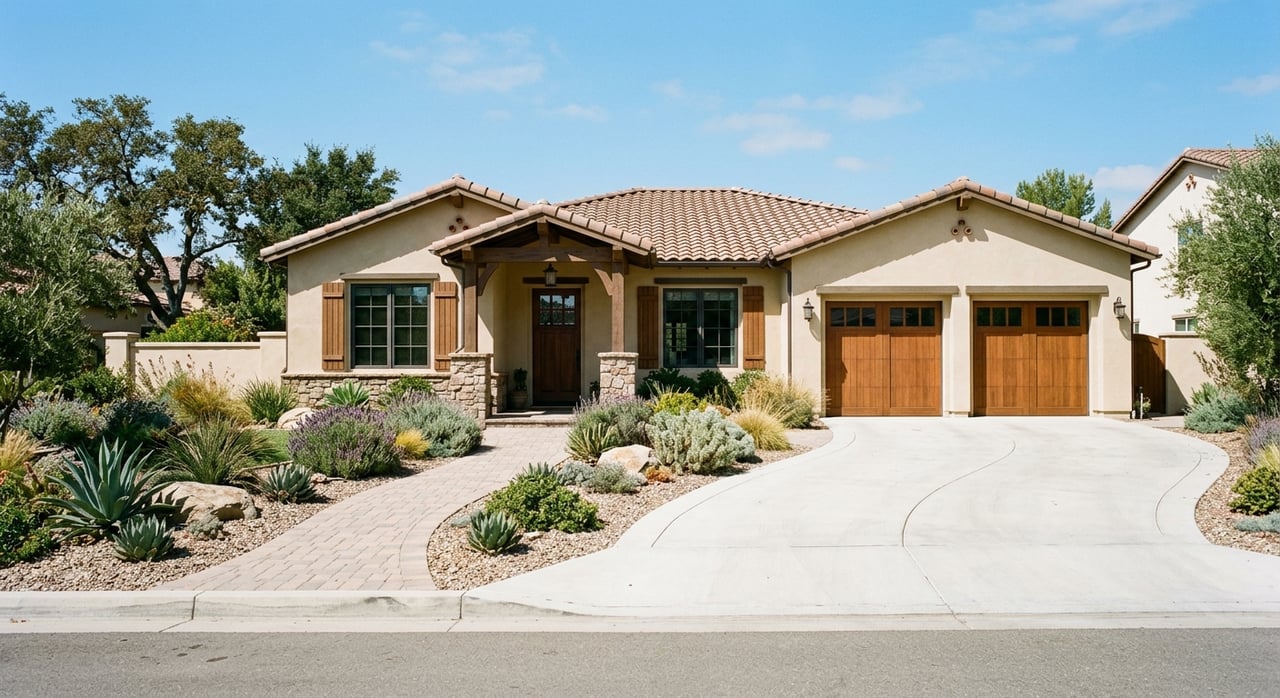
This is often the strongest ADU signal on a La Habra property. A garage conversion or conversion of another accessory structure can be one of the cleanest paths because conversions inside an existing structure, or a replacement structure built in the same location and dimensions, generally do not need extra setbacks.
La Habra also does not require replacement parking when a garage, carport, or parking space is demolished or converted for an ADU, according to Ordinance CC2025-05. For buyers and investors, that can materially improve feasibility.
Front setbacks and height still matter
State law is ADU-friendly, but that does not mean every concept works automatically. La Habra still applies base-zoning front setback standards, and second-story or above-garage concepts need an early height check against the underlying zone.
This is one reason some buyers overestimate a property’s ADU potential after a quick online search. A backyard cottage, garage conversion, and above-garage unit can each have very different fit depending on the lot and zoning context.
Older lots may still work
If you are evaluating an older property, do not assume nonconforming conditions make the lot unusable. La Habra states that existing nonconforming zoning conditions or unpermitted structures do not automatically block ADU approval unless they create a public health or safety issue.
That detail can matter a lot for value-add buyers. An older home with imperfect site conditions may still support an ADU if the actual layout, access, and utility setup are workable.
Utilities can make or break feasibility
A lot can look perfect on paper and still become challenging once utility constraints show up. In La Habra, ADUs and JADUs must connect to public water, electric, and sewer services under the city ordinance.
The city also states that new ADUs are prohibited in mapped areas where the city engineer determines that water or sewer service is insufficient. If a property is near a Southern California Edison easement, the applicant must submit a preliminary title report for SCE review.
What to watch for
When you screen a property, pay close attention to:
- Sewer and water service capacity
- Utility upgrade needs
- Easements that may affect placement
- Electric service coordination
- The likely complexity of trenching or site work
These issues do not always stop a project, but they can add time, cost, and uncertainty.
Approval timeline in La Habra
One of the more encouraging parts of La Habra’s ADU process is the city’s stated review timeline. The city says compliant ADU and JADU applications are approved or denied ministerially within 60 days.
That window drops to 30 days if you use a city-preapproved plan or an identical plan already approved during the current code cycle, according to Ordinance CC2025-05. The city also states that County of San Diego pre-approved plans are acceptable for La Habra permits.
For buyers, that does not mean every project is simple. It does mean that if the design is compliant and the site conditions are workable, the path can be more predictable than many people expect.
Parking, sprinklers, and solar
A few cost and design details are worth checking early because they can affect your budget. The HCD ADU handbook update explains that ADU parking requirements cannot exceed one space per unit or bedroom, whichever is less, and parking can be waived in several common situations.
Fire sprinklers are only required for an ADU or JADU when they are required for the existing primary residence. Newly constructed detached ADUs are generally subject to California Energy Code solar requirements, while conversions and additions within existing space are generally not.
What ADUs may cost in this market
Construction budgets vary widely, but the available research gives useful ballpark ranges. According to UC Berkeley ADU California research, a 2020 owner survey found median statewide ADU construction costs of $150,000, while Orange and San Diego Counties were about $130,000, or roughly $200 per square foot.
A Fountain Valley ADU study modeled new detached ADUs at about $142,500 for 600 square feet, $175,000 for 800 square feet, and $240,000 for 1,200 square feet. In the same study, conversion ADUs averaged $36,400 compared with $99,300 for new construction.
These are not fixed quotes for La Habra properties, but they do point to an important pattern.
Cost takeaway for property screening
If you are comparing homes based on ADU upside, a garage conversion or interior conversion may offer a lower-cost path than building a new detached structure from scratch. On the other hand, utility upgrades, difficult site work, slope, and higher-end finishes can push a project much higher.
That is where practical renovation knowledge matters. The right property is not just the one that allows an ADU on paper. It is the one where the likely design, construction path, and end use actually make financial sense.
Rental and resale considerations
ADUs can support long-term income use, but La Habra does place important limits on how they can be used. The city prohibits ADUs and JADUs from being rented for fewer than 31 days, so these units are not designed for a short-term-rental strategy under local rules.
The Berkeley research also found that 51% of new ADUs were income-generating rentals and 18% housed relatives or friends at no cost, with a median statewide rent of $2,000. In La Habra, the strongest use cases are usually long-term rental income, multigenerational living, or added flexibility for your household.
Separate sale is also limited. The city code bars separate sale or conveyance of an ADU except where state law allows it, which generally requires specific legal pathways described by HCD.
A practical La Habra ADU checklist
If you want to quickly screen a property, start with these questions:
- Is there an existing or proposed primary dwelling on the lot?
- Is it a single-family or multi-family property, and which ADU rules apply?
- Is there usable backyard depth for setbacks and building separation?
- Is there an existing garage or accessory structure that could be converted?
- Are side-yard conditions workable for access and construction?
- Could front setback or height rules limit the concept?
- Are there utility or easement issues that may complicate the project?
- Does the strategy rely on long-term use rather than short-term rental?
- Would a conversion approach make more financial sense than new construction?
If several of those answers are yes, the property may be a strong ADU candidate.
The smartest way to evaluate ADU upside
The best ADU opportunities in La Habra are usually not the flashiest listings. They are the properties where site layout, existing improvements, and utility conditions line up in a practical way.
That is why it helps to evaluate a home through both a real estate lens and a construction lens. If you want help identifying properties with realistic ADU upside, renovation potential, and long-term value, connect with Daniel P. Garcia for practical guidance tailored to your goals.
FAQs
What makes a La Habra property a strong ADU candidate?
- The strongest candidates usually have usable backyard depth, workable side-yard access, an existing garage or accessory structure, room for required setbacks and building separation, and manageable utility connections.
Can you build an ADU in La Habra on a small lot?
- Possibly, yes. In many cases, ADU feasibility depends more on site design and layout than lot size alone because state law limits how minimum lot size rules can block qualifying ADUs.
Are garage conversions allowed for ADUs in La Habra?
- Yes. La Habra allows conversion of existing garages and other accessory structures for ADU use, and the city does not require replacement parking when a garage, carport, or parking space is converted or demolished for an ADU.
How long does ADU approval take in La Habra?
- La Habra states that compliant ADU and JADU applications are approved or denied ministerially within 60 days, and within 30 days when a city-preapproved plan or qualifying identical plan is used.
Can you use a La Habra ADU as a short-term rental?
- No. La Habra prohibits ADUs and JADUs from being rented for fewer than 31 days, so they are generally better suited for long-term rental or household use.
What utilities are required for an ADU in La Habra?
- ADUs and JADUs must connect to public water, electric, and sewer services, and some sites may face added review if utility capacity is insufficient or if an easement affects the property.