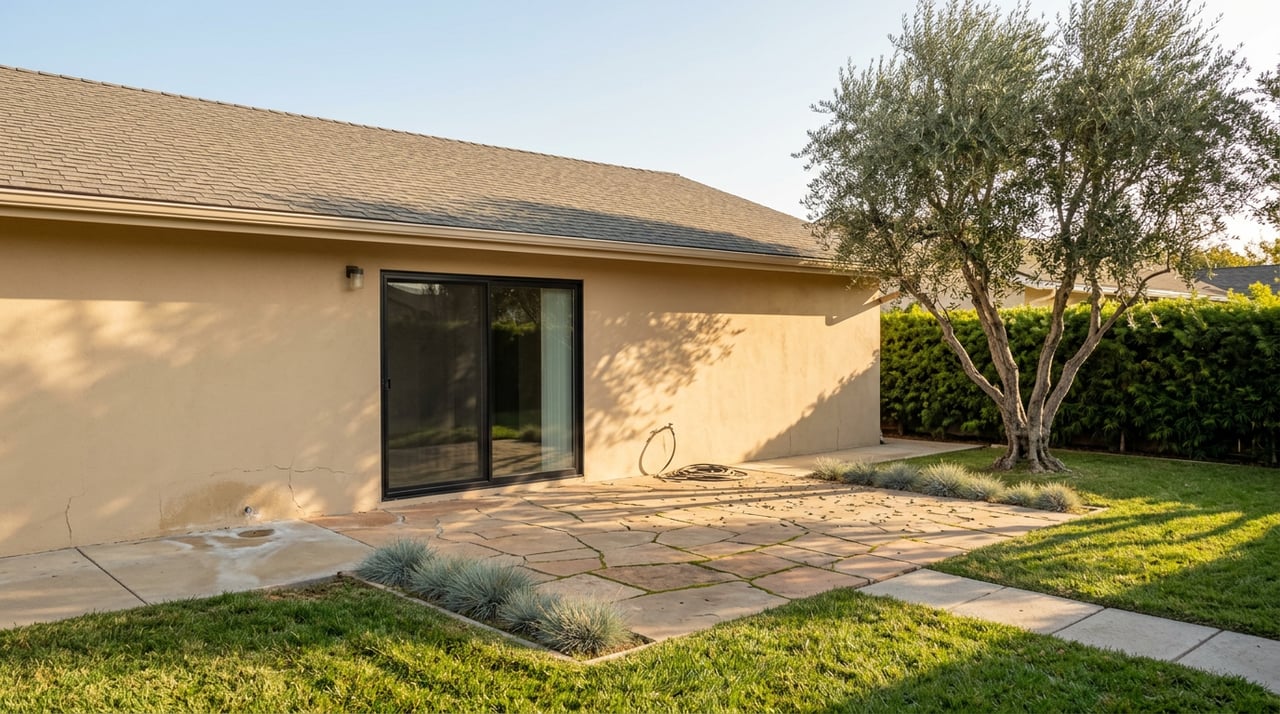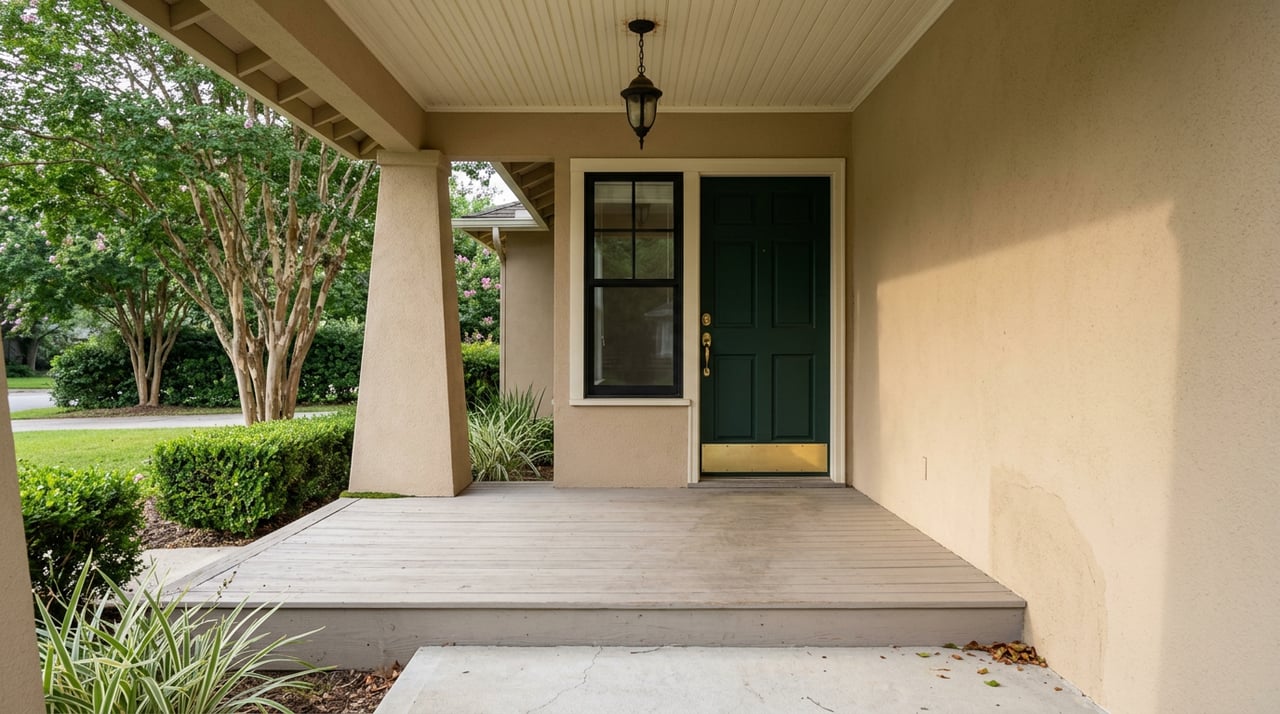
Walk through the Hadley-Greenleaf Historic District and you'll pass Craftsman bungalows built when Warren G. Harding was president, sitting a few blocks from townhomes that broke ground last year. Ask most buyers which one carries the bigger tax bill, and they'll guess the old one. Older wiring, older roofs, older everything, the assumption goes, plus a landmark designation that probably comes with red tape.
The assumption is backward. In Whittier, a home inside one of the city's four historic districts can carry a property tax bill 40 to 60 percent below what a comparable non-historic home pays, through a tool the city has offered since 2001 called a Mills Act contract. The catch, and the part that changes how a buyer should actually shop these neighborhoods, is that the discount is worth the most to whoever buys the house next, not to the family that's owned it since Nixon graduated from Whittier College down the street.
The mechanism: a different math problem, not a different tax rate
A Mills Act contract doesn't lower your tax rate. It changes how the county calculates the value your tax rate applies to. Instead of the standard market approach, which asks what the home would sell for, the county assessor switches to an income approach: what would this house rent for, minus expenses, divided by a capitalization rate. For an owner-occupied historic home, that arithmetic almost always lands well below market value, which is where the 40 to 60 percent savings comes from.
Whittier has run this program since 2001, and it sits alongside a shorter list of Los Angeles County cities that actively administer Mills Act contracts, a group that includes Pasadena, Long Beach, Glendale, and Monrovia. In exchange for the tax break, the owner signs a contract committing to restoration and maintenance work, at a level roughly equal to or exceeding the tax savings, on a schedule the city's Historic Resources Commission reviews before the City Council approves the agreement.
The twist: the discount is worth more to the next buyer than the current owner
Here's the detail that flips the intuition. The city's own program page states it plainly: a Mills Act contract does the most work reducing tax liability when the home was purchased with a high mortgage rate or at a premium market price. A family that has owned a Hadley-Greenleaf Craftsman since the 1980s, with a Prop 13 assessed value already frozen far below current market rates, has little left to save. The homeowner who buys that same house next year, at today's price and today's rate, is the one who captures the full benefit.
That makes Mills Act status something buyers in these districts should be pricing in, not treating as historical trivia. A landmarked home carrying an existing contract transfers that contract, and its tax basis, directly to the new owner. You're not applying for a benefit. You're stepping into one that's already running.
Four districts, four different profiles
Whittier's local register covers more than 100 designated landmarks, but the tax mechanics matter most inside the four locally designated historic districts, each with its own scale and character:
- Hadley-Greenleaf, designated in 1990, is the largest, with more than 190 properties bounded roughly by Greenleaf Avenue, Broadway Street, Hadley Street, and Painter Avenue. The district's Craftsman bungalows, including the Stokes/Sullens House and the Chaffey House, sit within walking distance of Uptown's shops and restaurants.
- Central Park, the district that rings the park itself along Washington Avenue, Hadley Street, and Friends Avenue, includes eleven landmark homes plus the historic Root Apartments, among them the 1893 Charles Sutherland House and a Queen Anne Victorian built in 1901.
- College Hills, designated in 2002, holds 97 properties in what the city identifies as Whittier's first planned hillside subdivision, laid out in 1923 along Worsham Drive, Hillside Lane, and Ridge Road.
- Earlham, designated in 2011, is the smallest by far at seven properties, an early Whittier College faculty neighborhood dating from 1903 to 1940.
A short drive from all four sits the Pio Pico Casa, the adobe home of California's last Mexican governor, one of the representative landmarks the city points to when explaining why any of this preservation apparatus exists in the first place.
What actually transfers when the house does, and what doesn't
If you're evaluating a home under an active Mills Act contract, the paperwork matters as much as the number on the tax bill. Contracts run for a minimum ten-year term, and they renew automatically each year, which the city describes as functionally a perpetual ten-year agreement, unless someone opts out. A property owner who wants to exit gives the city 90 days' written notice before the contract's anniversary date. The city can decline to renew with 60 days' notice of its own. Either side can walk away for any reason, but the wind-down still takes the full remaining ten years to complete.
The stakes for breaking the agreement outright are real. If the city cancels a contract because the owner breached its terms, or because the property no longer qualifies as historic, the county assessor can levy a penalty equal to 12.5 percent of the property's current fair market value. That's not a fee tucked into escrow. It's a number that should show up in any pre-listing conversation about a landmarked property, right alongside the maintenance schedule the seller agreed to when the contract was signed.
None of this should scare a buyer off. It should change the questions asked. Before writing an offer on a home inside Hadley-Greenleaf or College Hills, a buyer's team should confirm whether a Mills Act contract exists, what work remains on its schedule, and what the current assessed value looks like next to comparable non-historic homes on the same block. A seller sitting on an existing contract, meanwhile, is holding a genuine selling point, not just a plaque on the porch.
The corridor effect
Property tax mechanics are only half the story. Ongoing commercial redevelopment along the Greenleaf corridor in 2026 has been putting upward pressure on values inside the Hadley-Greenleaf district specifically, with homes closest to the walkable stretch commanding a premium over similar houses just a few blocks south. That's worth sitting with for a second. The same district collecting a below-market tax bill through Mills Act contracts is also the district seeing the strongest walkability-driven price support in the city. The maintenance obligation that comes with the tax break, ironically, is part of what keeps the housing stock looking sharp enough to justify that premium in the first place.
Short FAQ
Does every old house in Whittier qualify for a Mills Act contract? No. The property has to be a designated historic landmark or a contributing resource within one of the four historic districts, and it has to be enrolled voluntarily through an application the Historic Resources Commission and City Council both review.
Can an investor use a Mills Act contract on a rental property? Yes. The program covers both owner-occupied and income-producing property, though the capitalization rate the assessor uses differs slightly between the two, with a higher risk component applied to owner-occupied single-family homes.
Does landmark status stop me from renovating? No, but exterior changes to a landmarked home typically require a Certificate of Appropriateness before permits are issued. Interior work is generally unregulated unless it's part of the scope written into an active Mills Act contract.
The takeaway for anyone shopping these blocks
A tax bill that looks too low for the neighborhood isn't always a red flag. In Whittier's historic districts, it might be the single clearest signal that you're looking at a house someone already restored under a contract you're about to inherit. Knowing which of the four districts you're standing in, and what's actually written into that property's Mills Act agreement, is the difference between guessing at a home's true carrying cost and knowing it before you write the offer.
If you're weighing a purchase inside Hadley-Greenleaf, College Hills, Central Park, or Earlham, or you own a landmarked property and want a straight read on what your Mills Act contract is actually worth at resale, Daniel P. Garcia combines a general contractor's eye for what a historic home actually needs with the local track record to price it correctly. Request a Free Home Valuation & Renovation Plan and get a clear picture of what your property is worth, contract and all, before you decide your next move.