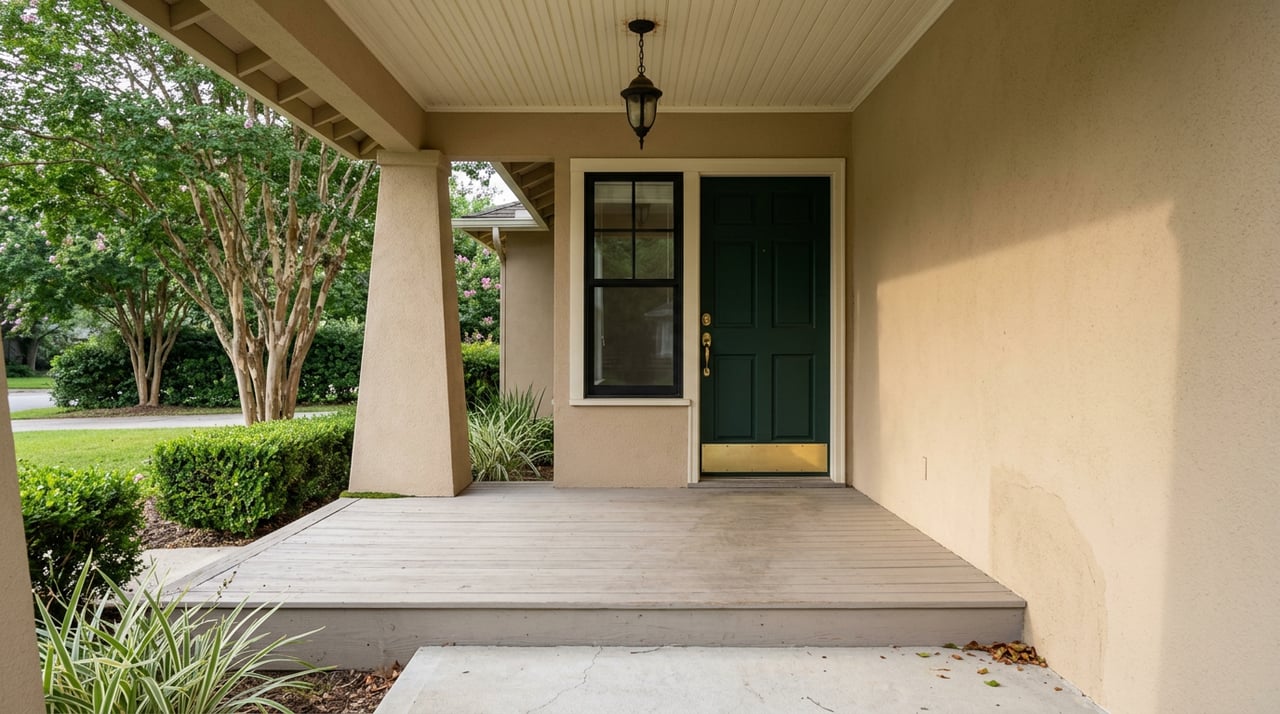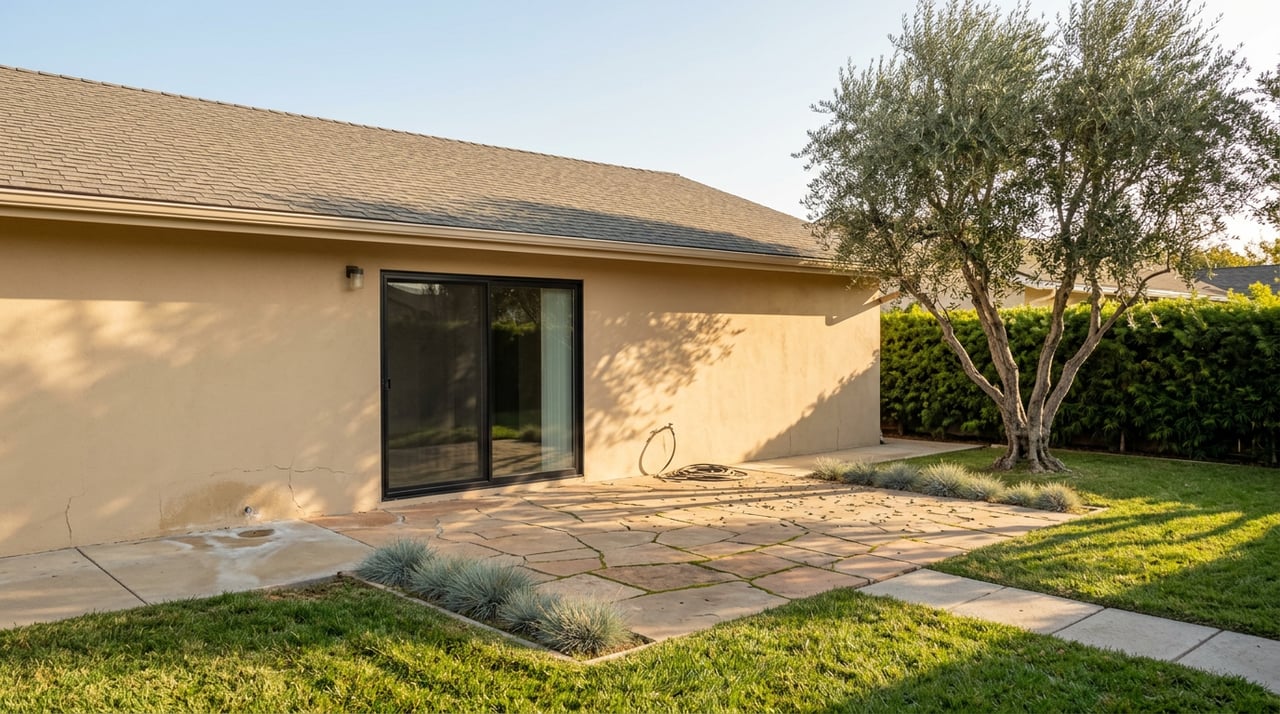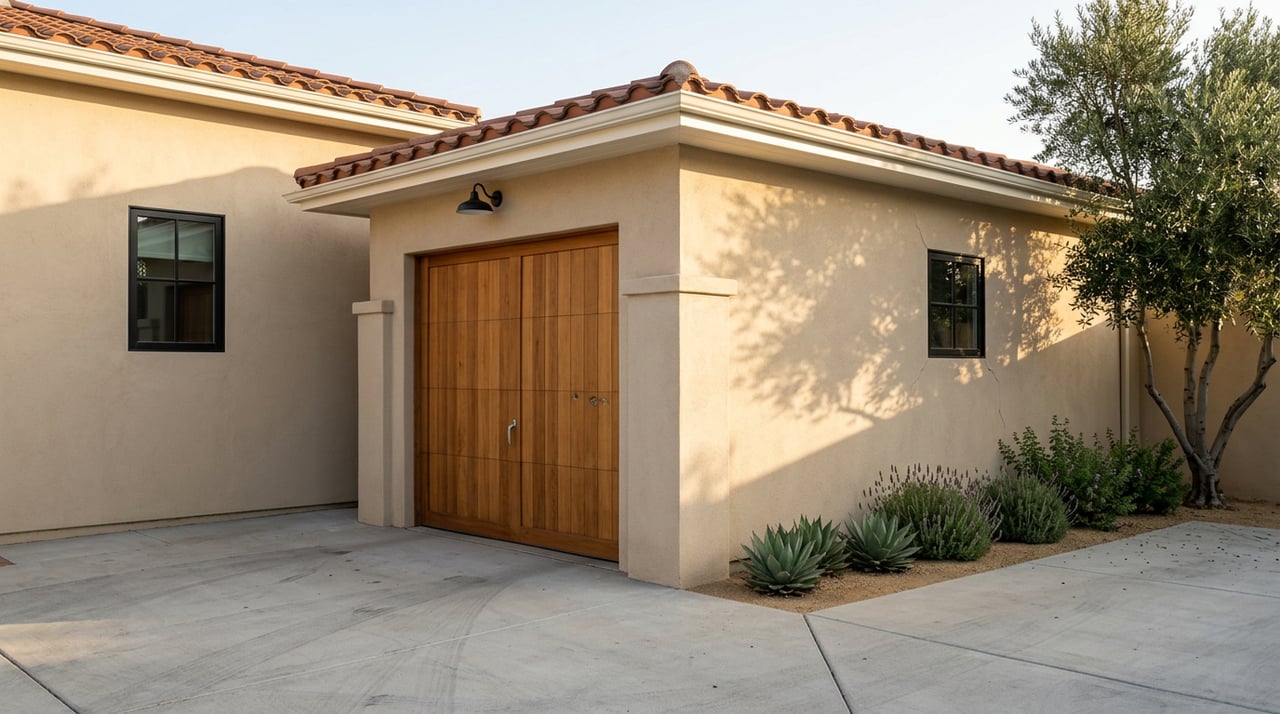
Most Whittier homeowners with an unpermitted garage conversion learn about the disclosure rule first, panic second, and call the Building & Safety counter third. That order is understandable and it is also how sellers end up spending forty to sixty thousand dollars on a project that adds nothing to their sale price. The retroactive-permit path everyone reaches for isn't the only one, and in Whittier specifically, it is rarely the one that nets the most.
The market is not doing sellers any favors this quarter. A properly presented Whittier home is still moving in about 32 days at a median around $872,000 through May 2026, with median price per square foot in the low $500s to mid $570s depending on the source and quarter. That means every 100 square feet of legally counted living area is worth roughly $53,000 to $57,000 at the appraisal. Every 100 square feet of unpermitted living area is worth zero at the appraisal, and often less than zero once the lender gets involved. The question isn't whether to fix it. The question is which fix.
The one line in Whittier's Building & Safety FAQ that changes the math
Read the City of Whittier's Building & Safety frequently asked questions carefully and one sentence does most of the damage. A permit to convert a garage into living space is available, but the applicant must still comply with the city's off-street parking requirement, which is a two-car enclosed garage. Translated for sellers: if the conversion is legalized as a room addition, the city expects a two-car garage to exist on the property. If the existing one is now a bedroom, a new garage has to be built somewhere else on the lot to satisfy the parking count.
That is a $40,000 to $70,000 sentence in most Whittier backyards, plus the setbacks, planning review, and school district development fees that come with any new structure over 500 square feet (residential rates run from $1.84 to $3.36 per square foot depending on which of the four Whittier-area school districts the property sits in). It is also the reason many sellers who start down the retroactive-permit road quietly abandon it three weeks later and list the home with a disclosure and a price cut.
What the appraiser and the lender actually do with the square footage
Appraisers in California do not count unpermitted square footage toward appraised value. Full stop. That interacts with three things at once on a typical Whittier sale:
- The listing agent's price opinion is drawn from comps that include the unpermitted area as living space, so it reads high.
- The appraisal comes in on legal square footage only, so the loan gets cut.
- FHA and VA appraisers may flag the unpermitted work as a condition of loan approval, narrowing the buyer pool to conventional financing or cash.
Cash investors know all of this and price accordingly. Industry guidance on California unpermitted-work sales pegs cash offers at roughly 70 to 80 percent of fair market value, and unpermitted work is generally understood to knock 5 to 20 percent off market value even in a conventional sale with proper disclosure. On a $870,000 Whittier home, that is real money and it is why the "just disclose and drop the price" path is not automatically the cheap option people think it is.
The pivot most sellers don't see: legalize it as an ADU
Here is where a licensed contractor's read of the code changes the answer. California Government Code § 66322 waives the replacement-parking requirement in specific situations, and one of them is directly on point: when a garage is converted or demolished to create an accessory dwelling unit, the local jurisdiction may not require replacement parking. Whittier's own ordinance, WMC § 18.10.020(I), tracks the state waivers. That means the same 400 square feet of former garage, legalized as an ADU rather than as a bedroom addition, does not trigger the two-car garage rebuild.
Two other pieces make this path more attractive than it looks on paper. Whittier maintains a pre-approved ADU plan catalog in Craftsman, Spanish, and Traditional styles, which shortens plan check on lots where a catalog design fits. And Whittier adopted the 2025 California Building Standards Code effective January 1, 2026, which is the code any retroactive permit will be measured against, so the standards conversation is the same whichever path is chosen.
The trade is worth stating plainly. An ADU legalization requires the space to actually function as an ADU under state definitions, meaning a kitchen, a bathroom, independent entry, and Title 24 energy compliance. That is more work than papering a bedroom. It is also usually less work than building a detached two-car garage from scratch.
A rough net-proceeds comparison on a typical converted garage
Assume a Whittier home with an unpermitted 400 square foot garage conversion, currently used as a bedroom and family room, on a lot where a new detached garage would fit but not comfortably. Market value with the space counted is $870,000. Market value with the space excluded from square footage is closer to $760,000. Local build costs in Whittier average $225 per square foot as of 2026, with garage-to-ADU conversions starting around $120,000 all-in.
| Path | Approximate cost | Appraised sq. ft. counted | Likely sale price band | Timeline |
|---|---|---|---|---|
| Sell as-is with full TDS/SPQ disclosure | $0 | Legal only | $720K to $780K | 30 to 60 days |
| Retroactive permit as room addition, build new two-car garage | $50K to $75K | Full | $850K to $880K | 4 to 8 months |
| Retroactive permit as ADU under state waiver | $60K to $120K depending on kitchen and Title 24 work | Full, counted as ADU | $870K to $910K | 3 to 6 months |
The numbers are illustrative and every lot is its own case, but the direction is consistent. On lots where the new-garage build is expensive or physically awkward, the ADU path wins on net proceeds even before you count the rental optionality it creates for a buyer.
The disclosure step that closes the trap either way
None of this changes the disclosure obligation. California Civil Code § 1102 requires the Transfer Disclosure Statement, and it specifically asks whether room additions, alterations, or repairs were made with permits. AB 968, in effect since 2023, adds a further requirement for sellers who took title within the previous 18 months: any contractor work of $500 or more must be disclosed. Concealment exposure runs under Civil Code § 1710 for fraud, and California courts have upheld buyer claims for permitting costs, demolition costs, and damages even when the unpermitted work predated the seller's ownership.
The practical reading: disclose the unpermitted conversion on the TDS and the Seller Property Questionnaire regardless of which path is chosen. If the retroactive permit or ADU legalization is complete before listing, the disclosure describes what was resolved and how. If it isn't, the disclosure describes what exists and buyers price accordingly.
A pre-listing sequence that actually works in Whittier
- Pull the property's permit history at the Whittier Community Development counter or through the city's Online Document Archive. Confirm what the original permitted footprint actually is.
- Measure the current interior against the permitted square footage. The gap is the exposure.
- Get a walk-through from a licensed contractor who has done both ADU legalizations and room-addition permits in Whittier. The right path depends on lot geometry, kitchen feasibility, and Title 24 constraints, not on which one sounds simpler.
- Price both paths against a realistic as-is sale, including holding costs and the appraisal gap.
- Decide before the listing photos are shot. Sequencing matters. A price cut mid-escrow after a buyer's inspector finds the addition is the most expensive version of this problem.
Short FAQ
Does the ADU path require the space to actually be rented? No. Legalizing space as an ADU requires it to meet ADU standards, including independent access, kitchen, and bath. Nothing in state or Whittier code requires it to be occupied by a tenant.
What if the conversion was done by a previous owner and I have no records? The disclosure obligation attaches to what the current owner knows or reasonably should know. Visible signs of a garage conversion generally count as reasonably knowable. The permit history pull at the city counter usually settles the question either way.
Will a conventional buyer walk away from a disclosed unpermitted conversion? Some will. Many won't, especially when the disclosure is paired with a clear scope, a contractor estimate for legalization, and either a credit at close or a completed permit before listing. Uncertainty is what kills these deals, not the underlying condition.
If you own a Whittier home with an unpermitted conversion and want a straight read on which path nets the most against your specific lot and current market conditions, Daniel P. Garcia works these files as both a licensed general contractor and a listing agent. Request a free home valuation and renovation plan and get a paired estimate: what the home sells for on each path, what the legalization actually costs, and which sequence protects the most net proceeds before your listing goes live.